Cozy Culprits › Guides › How to Play Murder Sudoku
How to Play Murder Sudoku
Murder sudoku is a logic-deduction puzzle played on a sudoku-style grid — but instead of filling digits into boxes, you place suspects into the rooms of a crime scene. Written clues eliminate possibilities until only one arrangement of everyone fits. When it does, the puzzle names its own killer: the suspect standing in the victim's room is the murderer.
There are no numbers, no arithmetic, and nothing to memorize. If you can play regular sudoku — or even if you can't — you can solve a murder. Here are the full murder sudoku rules, followed by the strategy that separates a five-minute solve from a stuck one.
The four rules of murder sudoku
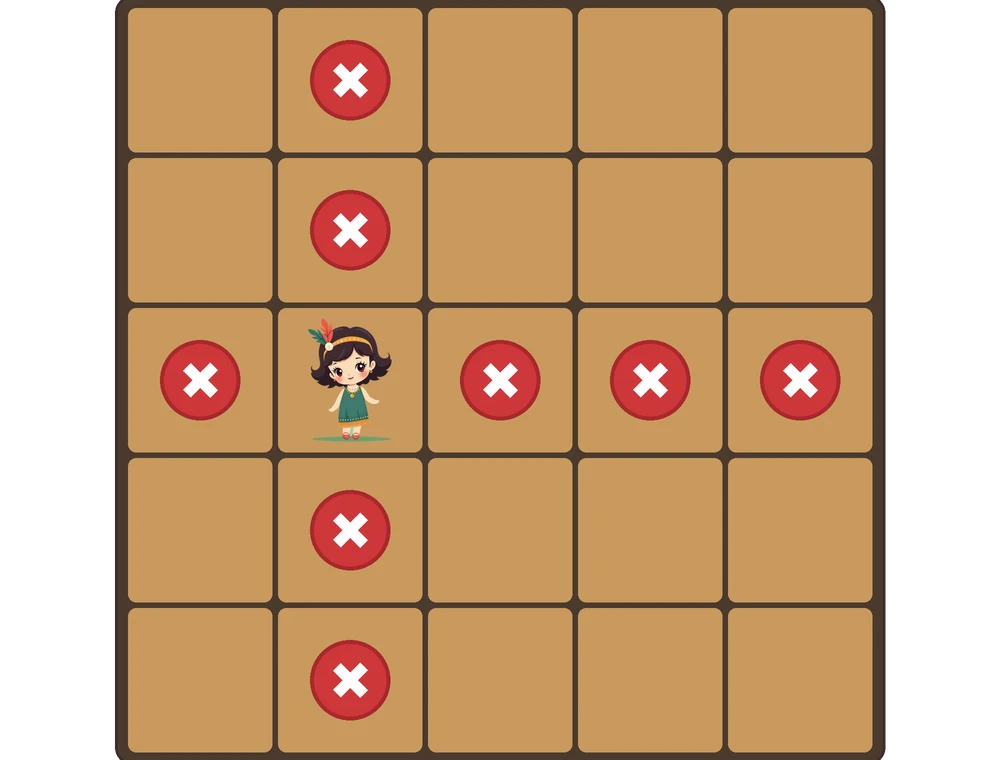
1. One suspect per row and per column
This is the sudoku heart of the game. Every named suspect must be placed on the grid so that no two suspects share a row or a column — exactly like placing non-attacking rooks in chess. On a 6×6 case with six suspects, every row and every column ends up with exactly one person in it.
2. The grid is a floor plan — rooms matter
The board is divided into irregular rooms (the Hall, the Study, the Kitchen…), like the regions of a jigsaw sudoku. Rooms do not limit how many suspects can stand in them — two people can share the Study. Rooms exist for two reasons: the clues talk about them ("Basil is in the Office"), and the victim's room is what finally identifies the murderer.
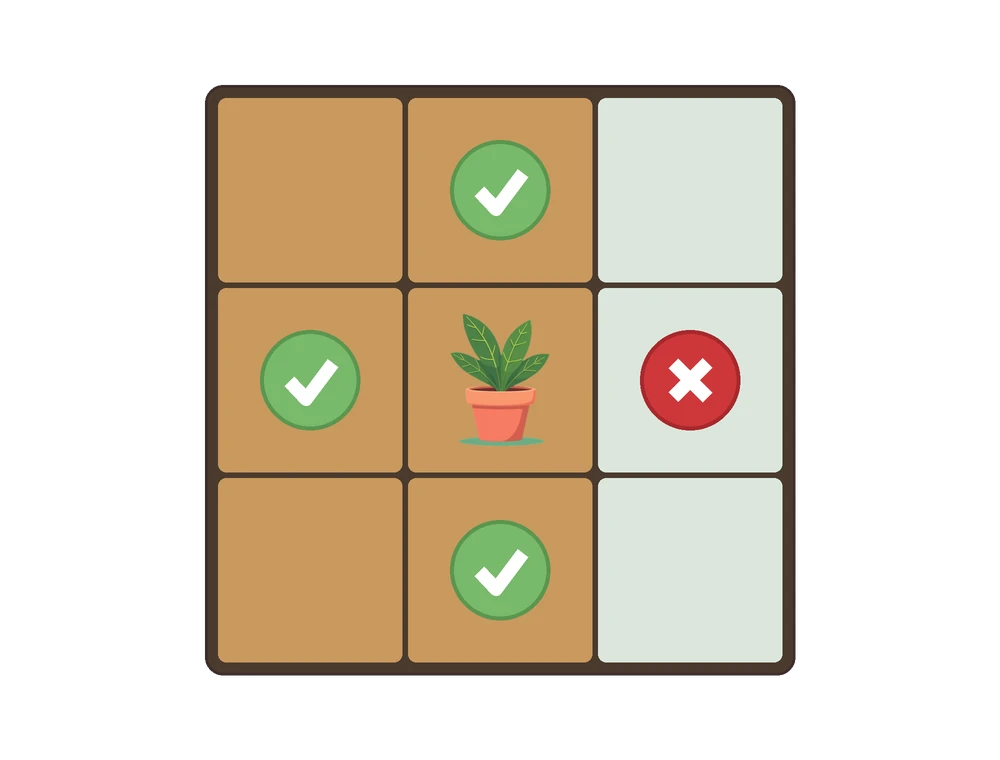
3. Furniture blocks. Rugs don't. Walls block "beside."
- Furniture and plants block their cell — nobody can stand on an armchair. Blocked cells still count as part of their row and column; they're just unavailable.
- Rugs are floor. A rug is decoration — suspects stand on rugs all the time. Don't let the artwork fool you into treating it as an obstacle.
- "Beside" means orthogonally adjacent — up, down, left or right. Never diagonal.
- Walls block "beside." This is the rule that catches everyone: if a wall separates two touching cells, the suspects in them are not beside each other. Two cells are only "beside" when you could step between them without passing through a wall.
4. Every clue must fit — and only one layout will
Each case comes with a short list of clues: positions ("Iris is in the Bedroom"), adjacency ("Poppy is beside the Colonel"), negations ("Dr. Bell is not in the Hall"), and relations ("the murderer stands on a rug"). A fair murder sudoku has exactly one arrangement that satisfies all of them simultaneously. Find it, and the case solves itself.
How do you know who the murderer is?
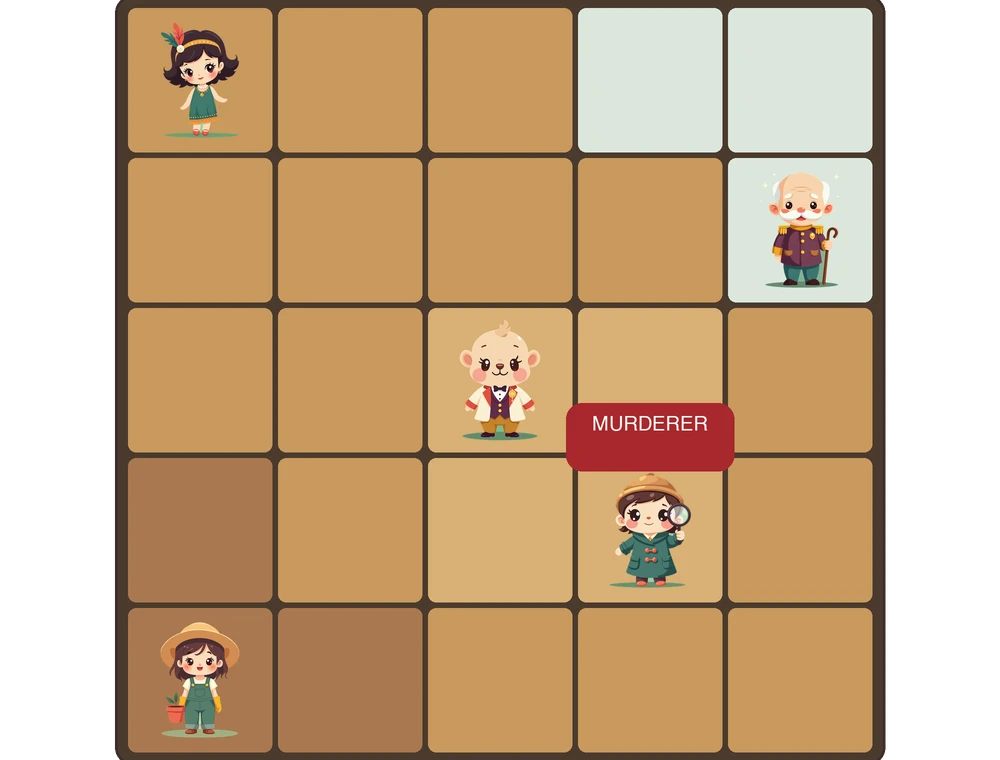
You never pick a culprit on a hunch. The victim's body is marked on the board — say, in the Study. Place all six suspects legally, and whoever ends up sharing the victim's room is the murderer. That's the whole reveal mechanism: the logic corners them, and the last placement is the confession.
Strategy: solve like a detective, not a gambler
- Read every clue once before placing anyone. The clue that names a room ("The Colonel is in the Cellar") is your anchor; relational clues ("X is beside Y") only become useful after anchors are down.
- Cross out before you place. Use pencil marks (in Cozy Culprits, per-suspect ✕ marks) to eliminate cells: blocked furniture, rows and columns already used, rooms a clue rules out. Elimination is 80% of the solve.
- Hunt for forced cells. When a suspect has exactly one legal cell left — or a cell has exactly one possible suspect — that placement is forced. Lock it in, then re-scan: every placement removes a row and a column for everyone else and usually forces the next move.
- Re-read clues after each placement. A clue like "Poppy is beside the Bedroom" might have meant four cells at the start and only one now. Clues aren't spent when used once — they keep tightening.
- Watch the walls. When an adjacency clue "can't possibly work," the answer is almost always a wall you forgot blocks the connection — or the diagonal you're not allowed to count.
- Never guess. If you're stuck, you haven't run out of logic — you've missed an elimination. Walk the suspects one by one and count their remaining legal cells.
Difficulty: what changes between Easy and Hard
| Tier | Grid | Suspects | What makes it harder |
|---|---|---|---|
| Easy | 5×5 | 5 | Direct clues — most placements are near-forced |
| Medium | 6×6 | 6 | Relational clues; walls start doing real work |
| Hard | 7×7 | 7 | Fewer clues per suspect; longer deduction chains and nested "beside" logic |
Where to practice murder sudoku
The fastest way to internalize these rules is a few real cases with instant feedback. Cozy Culprits — our free iPhone game — was built exactly for that:
- An interactive tutorial teaches place / cross-out / read-a-clue by doing, in under a minute.
- A new daily case in Easy, Medium and Hard — the same board for every player worldwide, with streaks and a leaderboard. (Why daily puzzles hook us →)
- A campaign of cases from Rookie to Mastermind, all with the unique-solution guarantee — so the "never guess" advice above is always true.
- Hints that point you to the clue you've been staring past — they never reveal the murderer.
- Fully offline. Planes and subways are excellent crime scenes.